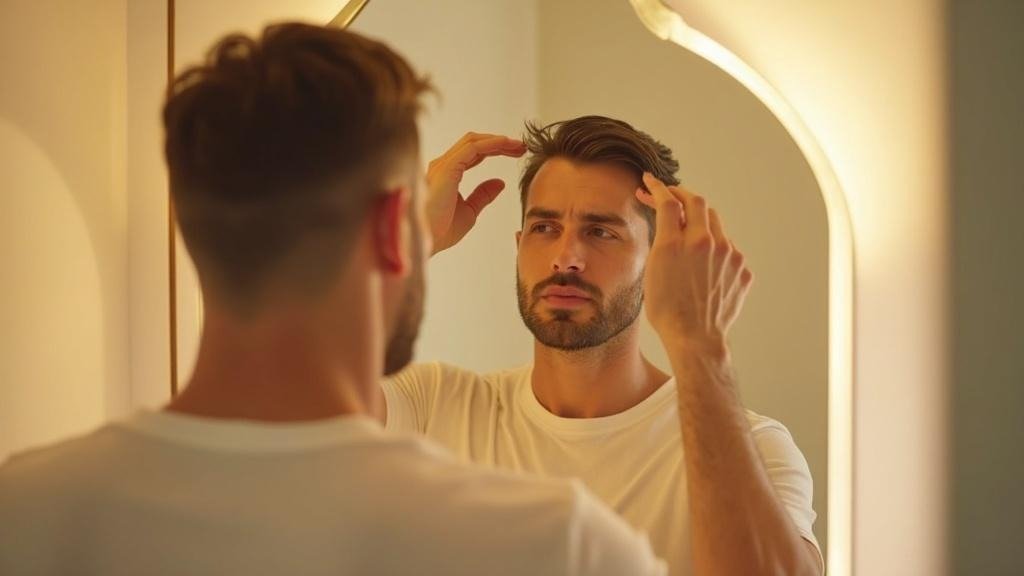

Most hair loss content treats every person as a generic 30-something man panicking about his temples. The reality is messier. A 19-year-old woman with postpartum shedding, a 55-year-old man at Norwood 5, and a 40-year-old noticing diffuse thinning all need completely different starting points. Here is what actually holds up for different ages and situations.
1. HairLine AI (Best First Step, Any Age)
Before spending money on anything, you need to know what stage you are actually at. HairLine AI is a free, browser-based tool that reads a photo or webcam shot, classifies your Norwood stage using a high-end vision model (Gemini 3 Pro), and spits out a graft estimate and rough transplant cost range. No account. No payment. No sales funnel greeting you at the end.
That objectivity is the point. Most quizzes from treatment brands are designed to sell you something. This one just tells you where you stand. A Norwood 2 and a Norwood 5 should not be shopping the same options, and this tool at least gives you a real read before you commit. It does not prescribe anything or replace a dermatologist visit. It is a calibration step, nothing more, and for that narrow purpose it is genuinely useful.
See also: Affordable and Quick Boynton Beach Garage Door Repair You Can Trust
2. Generic Minoxidil (Ages 18 and Up, Men and Women)
The cheapest entry point in hair loss. Store-brand 5% minoxidil foam or solution costs roughly $15 to $25 for a three-month supply. It is FDA-approved for androgenetic alopecia. Results take at least three to four months to appear, and if you stop using it, whatever you gained comes back out. No shortcuts there.
3. Hims (Men 20s to 40s Who Want Options in One Place)
Hims carries the widest treatment menu of any telehealth brand currently operating. Topical finasteride, oral finasteride, topical minoxidil, oral minoxidil, and several combination products. They are the only major platform offering topical finasteride, which some men prefer over the oral version due to side effect concerns. Prices vary by plan but the combination subscriptions run roughly $50 to $80 per month.
4. Keeps (Men 20s to 50s on a Budget)
Keeps focuses almost entirely on hair loss, which keeps the experience straightforward. Their three-month plan pricing is competitive, and shipping runs about $5. Finasteride and minoxidil are the two treatments offered, both with clinician oversight. Simple and cheaper than most competitors over time.
5. Finasteride (Men Only, Typically 18 to 60)
Worth calling out as its own entry because it is genuinely the most effective oral option for male pattern hair loss. Prescription only. Possible sexual side effects in a minority of users, and that minority deserves to know the risk before starting. Results take six months or longer. Stopping the medication reverses any gains, usually within a year.
6. Happy Head (Adults 25 to 55 Who Want Custom Compounding)
Happy Head compounds prescription topical formulas, blending finasteride, minoxidil, and other ingredients into a single application. Custom compounding is not for everyone, but for people who have already tried standard formulations without great results, a different delivery method is worth exploring with a clinician.
7. Ketoconazole Shampoo (Any Age, Adjunct Use)
Often overlooked. Ketoconazole shampoo (prescription or 1% OTC) has some evidence supporting its use alongside minoxidil for androgenetic alopecia. It is not a standalone treatment, but it costs almost nothing to add and carries minimal risk.
8. Keranique (Women 35 and Up With Diffuse Thinning)
One of the few OTC brands specifically formulated for women. The active ingredient is 2% minoxidil. Women experiencing diffuse thinning, especially around menopause, are a different clinical picture than men with receding hairlines. Keranique targets that group specifically.
9. Derma-Rolling (Ages 25 to 50, Adjunct Strategy)
A 0.5 mm to 1.5 mm derma roller used weekly creates minor scalp micro-injuries that appear to improve minoxidil absorption and may stimulate some follicle activity on their own. Evidence is still limited but preliminary studies are encouraging. Inexpensive and low-risk when done correctly.
10. BosleyRx and Bosley (Adults 30 to 65 Considering Transplant)
Bosley has transplant clinic heritage, and BosleyRx now adds a prescription arm. For people who are past the point where topicals will move the needle much, a combined Rx-plus-surgical consultation makes sense. Transplants are typically not recommended until loss has stabilized.
11. HairClub (Adults 40 and Up, Non-Surgical Programs)
HairClub runs in-person clinics with programs that include hair systems, scalp treatments, and some medical options. Pricing is not listed publicly and varies by location. Worth a consultation for people who want hands-on clinic support rather than a telehealth subscription.
Common Questions
Does your Norwood stage actually change which treatment you should start with?
Yes, meaningfully. A Norwood 2 still has most follicles intact and responds well to minoxidil or finasteride alone. By Norwood 5 or 6, medical treatments can slow further loss but will not rebuild a hairline. Tools like HairLine AI exist specifically to help people figure out which conversation they should even be having first.
Is Hims or Keeps the better pick for a man in his late 20s who is just starting to notice thinning?
For someone early in the process, Keeps is cheaper and simpler if finasteride and minoxidil are all you need. Hims makes more sense if you want topical finasteride specifically, since Keeps does not offer it. Both require a clinician review before prescribing, which is the appropriate baseline regardless of which platform you choose.
At what age is a hair transplant actually worth considering, and what does Bosley recommend?
Most transplant specialists, including those at Bosley, prefer to wait until loss has stabilized, which often means the mid-30s at the earliest for men with androgenetic alopecia. Operating on an actively receding hairline risks a mismatched result within a few years. A BosleyRx consultation can help determine whether you are at that point.
Why does Keranique use 2% minoxidil instead of 5% when women also respond to higher concentrations?
The 2% formulation was the original FDA-approved concentration for women when Keranique launched, and the brand has stayed with it. The 5% foam is now also FDA-approved for women, so this is partly a legacy product decision. Women who have not responded to 2% should ask a dermatologist about moving to 5%.
Can a teenager or someone under 20 safely use any of the treatments listed here?
Generic minoxidil is approved for adults 18 and up. Finasteride is not recommended for anyone under 18, and it is contraindicated in women who are or may become pregnant. For a younger person noticing early shedding, a dermatologist visit to rule out nutritional deficiency or alopecia areata is a better first step than jumping to prescription medication.
Sources
- American Academy of Dermatology, hair loss treatment guidelines (public clinical reference)
- FDA drug database, minoxidil and finasteride approval records
- Published pricing from Hims, Keeps, and Happy Head official websites (verified 2025 to 2026)
- Ketoconazole and androgenetic alopecia: Journal of the American Academy of Dermatology (publicly indexed)